
REIT Roofing Services
REIT Roofing Services gets scoped from roof evidence, operating risk, Amarillo weather exposure, and the decision the building owner needs to make.
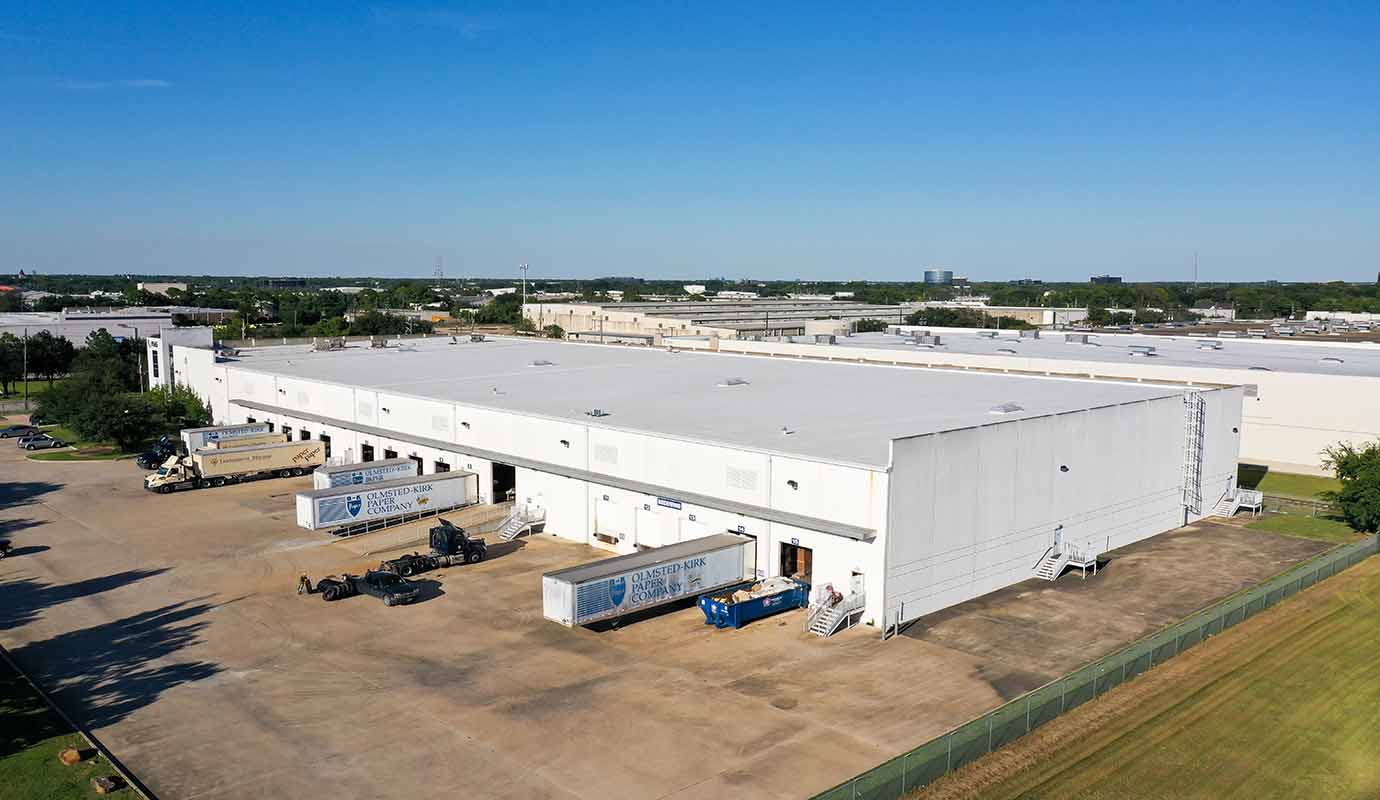
REIT Roofing Services in Amarillo, TX
Realty Income Corporation has a visible presence in the Texas Panhandle through its single-tenant net-lease retail portfolio, holding freestanding commercial properties across Amarillo that include drug stores, dollar stores, quick-service restaurants, and automotive service centers — the kind of stable, long-duration tenanted assets that underpin Realty Income's monthly dividend model. For asset managers overseeing these net-lease properties in Potter and Randall counties, roof condition feeds directly into the property-level metrics that drive portfolio performance reporting and support the investment-grade credit story Realty Income markets to investors.
Managing a net-lease retail portfolio in Amarillo requires a roofing vendor program that accounts for the specific property type mix. Single-tenant net-lease buildings typically carry flat or low-slope roofs over single-story structures — large surface areas relative to footprint, exposed to the Panhandle's extreme climate conditions, and covered under lease terms that assign maintenance responsibility to tenants. Even with NNN lease structures, REIT asset managers must maintain independent awareness of roof conditions because tenant-maintained roofs that deteriorate create property condition assessment exposure at lease maturity and disposition, directly affecting residual values and renewal leverage.
The NOI sensitivity calculation for Amarillo net-lease properties centers on lease continuity and residual value preservation. A freestanding drug store generating $185,000 in annual base rent under a long-term NNN lease has a current value supported by that income stream. A roof allowed to deteriorate to a condition that triggers tenant rights under the lease — rights that may include repair cost deductions or, in extreme cases, lease termination notice provisions — introduces income risk that cap rate math translates immediately into valuation impact. A $185,000 annual income stream at a 5.5% cap rate implies a $3.4 million property value. Any legitimate income risk erodes that figure in ways that show up in NAV calculations and analyst models.
CAPEX planning for Amarillo single-tenant retail assets requires annual condition assessments that feed a 10-year reserve model credible enough to survive REIT investor scrutiny. Even on NNN properties where tenant maintenance responsibility is contractual, the asset manager must document roof condition and track remaining useful life because the reserve model must account for capital exposure at lease expiration — when the building reverts to REIT control and a new tenant or sale requires the roof to meet institutional standards. Acquisition teams underwriting Amarillo purchases price that end-of-lease condition exposure into their models, and asset managers who track it through ownership protect value at disposition.
A property manager responsible for fifteen single-tenant net-lease assets across Amarillo — scattered across the I-40 corridor, the Bell Street retail strip, and suburban pad sites in the metro area — cannot manage fifteen separate roofing vendor relationships while also handling lease administration, tenant communication, and regulatory compliance. A preferred vendor program with one trusted local contractor, operating under a master service agreement that covers annual inspections across all properties and emergency response on a defined SLA, converts roofing oversight from a fragmented maintenance function into a managed data system that feeds reserve reporting on schedule.
The CapEx-versus-OpEx accounting treatment for roofing on Realty Income's Amarillo assets follows the standard REIT classification discipline. For NNN lease properties, the tenant's maintenance expenditures are not on the REIT's books — but when the REIT conducts capital improvements between tenants or at lease maturity, those costs are capitalized and depreciated. The asset manager's job is to ensure that end-of-lease capital needs are documented well in advance, so the REIT's CAPEX forecast reflects realistic timing and cost rather than the kind of surprises that produce material variances in quarterly reporting.
Amarillo represents a secondary market where value-add acquisition activity has been driven by the broader Texas commercial real estate expansion. REITs acquiring single-tenant retail and small industrial assets in the Panhandle are frequently purchasing properties where private owners managed capital conservatively. Roof systems on these acquired assets often reflect deferred maintenance that compressed the seller's operating costs but transferred liability to the acquirer. Pre-closing PCAs that document actual roof condition give acquisition teams the data to negotiate escrow holdbacks or price adjustments that reflect true capital exposure.
Property condition assessments for Amarillo acquisitions require a roofing contractor who understands the compressed timeline of commercial real estate closings — typically 10 to 21 days from access authorization to written report delivery. For single-tenant net-lease assets, the PCA scope should include membrane condition across the entire rooftop, drainage system adequacy, all penetration and flashing conditions, parapet wall integrity, and HVAC unit curb assessments. Cost projections must distinguish immediate needs, near-term capital, and long-term replacement reserve in a format that drops directly into acquisition underwriting without interpretation.
Amarillo's climate creates one of the most demanding roofing environments in the country for commercial asset managers. The city sits in the hail belt — severe convective storms produce large-diameter hail events that can destroy a membrane system in a single storm, triggering insurance claims and emergency repair sequences that disrupt CAPEX planning and stress reserves. High winds accompanying Panhandle storm systems also create uplift risk on low-slope roofs, particularly at edges and penetrations. A roofing contractor who understands insurance claim documentation, hail damage assessment protocols, and wind-resistant specification details is the partner a REIT asset manager needs to manage storm exposure across a Panhandle commercial portfolio.
- How does NNN lease structure affect REIT roof management responsibility in Amarillo?
- NNN leases assign day-to-day maintenance responsibility to tenants, but REIT asset managers still conduct independent inspections because tenant-maintained roofs that deteriorate create property condition assessment exposure at lease maturity, affecting residual values, renewal leverage, and disposition pricing.
- What is the financial impact of hail damage on a REIT net-lease retail portfolio in Amarillo?
- Hail events can trigger simultaneous insurance claims across multiple properties, disrupting CAPEX schedules, consuming reserve funds, and introducing income risk if tenant operations are affected — making storm documentation protocols and insurance claim management capabilities essential contractor qualifications in the Texas Panhandle.
- How should a REIT structure its 10-year roofing reserve model for Amarillo assets?
- The model should document membrane condition, installation year, remaining useful life, and phased cost projections by property — including end-of-lease capital exposure for NNN assets where tenant maintenance responsibility returns to the REIT at term expiration.
- Why does a REIT need independent roof inspections on NNN lease properties?
- Independent inspections track roof condition through the lease term so asset managers can document deterioration, enforce lease maintenance covenants if needed, and prepare accurate capital budgets for the end-of-lease transition period when the roof must meet institutional standards for remarketing or sale.
- What should a PCA roof assessment include for an Amarillo single-tenant acquisition?
- The assessment should cover membrane condition, drainage adequacy, all flashing and penetration integrity, HVAC curb conditions, and wind/hail damage evidence — with cost projections segmented as immediate repair, near-term capital, and long-term replacement reserve formatted for direct use in acquisition underwriting.
Start a conversation
Send the building location, roof type if known, leak photos, tenant restrictions, and the timing pressure. We will help turn the roof concern into a clear next step.
Contact Commercial Roofing of AmarilloExplore More
- Aviation Aerospace Facilities
- Dst Roofing
- Commercial Real Estate Reits
- Healthcare Systems
- Retail Chain Operators
- KEE Single Ply Roofing
- Skylight Penetration Flashing
- Self Storage Roofing
- Commercial Roof Repair
- Commercial Roof Replacement
- Commercial Roof Coatings
- Roof Maintenance Programs
- Commercial Roof Inspections & Reports
- Roof Reports & Assessments