
Data Center Roofing
Data Center Roofing gets scoped from roof evidence, operating risk, Amarillo weather exposure, and the decision the building owner needs to make.
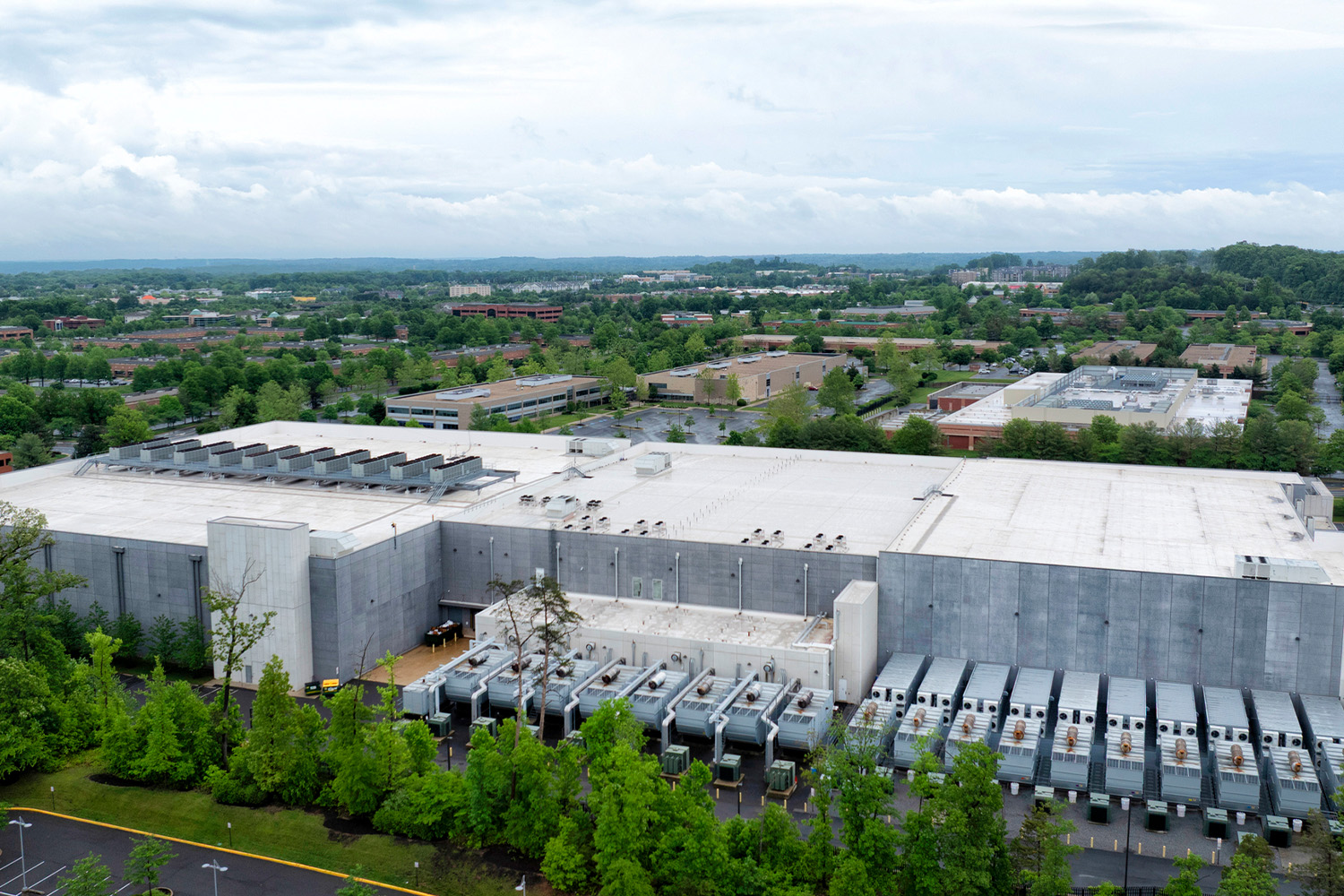
Data Center Roofing in Amarillo, TX
Amarillo, Texas has attracted serious data center investment that might seem surprising given its distance from major coastal tech hubs, but the city's profile lines up well with what large cloud and enterprise operators are looking for: low-cost land, access to renewable energy (the Texas Panhandle leads the state in wind power generation), ERCOT grid connectivity, and a population center that provides operational workforce without the labor cost premiums of Dallas or Austin. Amazon Web Services, Microsoft, and several hyperscale colocation operators have either announced or are actively developing in the Panhandle region, and Amarillo itself has seen campus-scale development near the I-40 and I-27 interchange corridors.
Roofing a data center in Amarillo requires a very different set of assumptions than roofing in a Mid-Atlantic or Great Lakes market. The climate is semi-arid with high UV radiation, extreme diurnal temperature swings — 40°F or more between daytime high and nighttime low is common — and severe hailstorms that rank among the most destructive weather hazards in the United States. Insurance underwriters in the Panhandle region have become increasingly restrictive about single-ply membranes without hail-rated cover boards, and data center operators who have experienced hail damage on TPO roofs without cover boards have universally moved to protected membrane or cover board assemblies for their next installation.
Cooling requirements on Amarillo data center roofs reflect the region's hot, dry climate. West Texas summer temperatures regularly exceed 100°F, and rooftop mechanical equipment — CRAC units, cooling towers, and chiller coils — operates at full load capacity for a significant portion of the year. The roof assembly itself contributes to cooling load reduction: a white reflective TPO or PVC membrane can reduce rooftop surface temperatures by 40 to 50°F compared to a dark EPDM or built-up surface, which directly reduces the entering conditions for rooftop cooling equipment and lowers the facility's PUE (power usage effectiveness). For data centers in Amarillo's climate, the energy savings from a reflective membrane versus a dark membrane over a 20-year period often justify the modest cost premium of specifying the reflective option.
Wind is the Amarillo Panhandle's most persistent structural roofing challenge. The region regularly experiences sustained winds of 25 to 40 mph with gusts above 60 mph during severe weather events, and the flat terrain provides no natural windbreak. Mechanically attached TPO on a 6-inch grid pattern that would be adequate in Fort Worth or Dallas is under-specified for Amarillo — the ASCE 7 design wind speed for the Panhandle exceeds most Texas metro areas, and data centers with large uninterrupted roof areas require enhanced attachment spacing, particularly within the perimeter and corner zones where uplift forces multiply. Fully adhered systems eliminate the point-load concentration that mechanical fasteners create under wind uplift, and are increasingly preferred for large Amarillo data center footprints.
Generator exhaust and fuel storage proximity considerations in Amarillo data centers are complicated by the facility's need to plan around the prevailing southwest wind direction. In a market where wind-driven dust and particulate are already a maintenance concern for HVAC filtration, generator exhaust routing that aligns with the prevailing wind toward any air intake location creates a compounding problem. Roof penetration locations for generator stacks should be coordinated with the mechanical engineer's air intake siting plan before the roof layout is finalized — a coordination step that is easily missed when the mechanical and roofing scopes are contracted separately.
Hail damage assessment on existing Amarillo data center roofs is a specialized skill. The region's hailstorms can deliver golf ball to baseball-sized hail that creates hidden punctures in TPO that aren't visible to a standard visual inspection but show up on infrared scans as moisture infiltration zones within 60 to 90 days of the event. Any Amarillo data center that experiences a significant hail event should schedule a post-event infrared inspection within 30 days — before the insurance claim window closes — to document any subsurface moisture infiltration that doesn't yet show up as an active leak. Hidden moisture under data center roof assemblies is an asset life issue that, if unaddressed, leads to insulation replacement rather than just membrane patching.
TPO 80 mil with a high-density polyiso and a 1/4-inch cover board as the standard Amarillo data center spec has become common practice among the contractors most active in this market. The cover board (typically fiberglass-mat gypsum or high-density wood fiber) provides hail impact resistance that a TPO membrane alone cannot deliver, and it provides a stable, consistent surface for torch-applied or heat-welded detail work at penetration flashings. In the corner and perimeter zones where wind uplift calculations require increased attachment density, the cover board distributes those loads more effectively than attachment directly into insulation board.
Cable management and conduit penetration details on Amarillo data center roofs need to account for the region's temperature cycling. Conduit that runs through a rooftop penetration transitions between a below-deck space that may be air-conditioned to 68°F and a rooftop environment that can reach 140°F on a summer afternoon. That 70°F+ differential drives thermal expansion and contraction that, over years, works conduit penetration sleeves loose from their flashings. Expansion-compensating conduit sleeves or adequate flex loop in the conduit run before it penetrates the roof plane eliminates this failure mode before it starts.
Amarillo's growing data center market has created demand for roofing contractors who understand the intersection of wind, hail, UV, and thermal cycling that is unique to the Texas Panhandle. Operators evaluating contractors for data center work here should ask specifically about experience with high-wind attachment design, post-hail infrared inspection protocols, and cover board system installation — not just general commercial roofing experience. The performance gap between contractors with Panhandle-specific experience and those learning on the job is wide enough to matter on a facility where a roof failure has seven-figure consequences.
Questions Owners Ask
How do we spec a roof that can withstand Amarillo hailstorms without losing reflectivity?
The standard approach is an 80-mil TPO over a 1/4-inch minimum cover board, achieving FM Global hail ratings of SH (severe hail) when properly assembled. White TPO maintains most of its reflective benefit even after hail impact testing, unlike some coatings that lose reflective surface when damaged. For the highest-risk exposures, some Amarillo data center operators specify a 1/2-inch cover board and thicker TPO, which can achieve FM's most demanding hail classifications. After any significant hail event, an infrared scan rather than a visual inspection is the correct assessment tool.
What wind uplift rating should we require for an Amarillo data center roof?
Amarillo's design wind speed under ASCE 7 puts most facilities in FM Global's 1-90 or 1-105 wind uplift classification range for interior field zones, with corner and perimeter zones requiring substantially higher uplift resistance. For a large single-story data center footprint with a low-slope roof, this typically means mechanical attachment at 6 inches on center in field areas, 4 inches on center in perimeter zones, and 3 inches on center at corners — or a fully adhered system that eliminates the perimeter vs. field distinction. The roofing contractor should provide FM Global or UL wind uplift calculations specific to your building geometry, not just a generic product spec sheet.
How does a reflective roof membrane actually affect our data center's PUE?
A white reflective membrane can reduce rooftop surface temperature by 40 to 50°F versus a dark surface on a 100°F Amarillo summer day. This reduces the delta between ambient air temperature and the membrane surface, which lowers the sensible heat load entering the building through the roof assembly. For a data center running 200+ watts per square foot of floor area, a 5 to 10 percent reduction in cooling load from roof surface emissivity improvements can translate to meaningful PUE improvement — typically 0.03 to 0.07 PUE reduction — over the course of an Amarillo summer cooling season.
We're planning a new campus near the I-40/I-27 area — what should roofing contract specs include?
For a new Amarillo data center campus, the roofing contract specification should include: minimum membrane thickness (80 mil TPO or PVC), cover board requirement with specified hail rating, FM Global wind uplift classification with calculations for your specific building geometry, pre-installation penetration coordination drawing requirement, third-party inspection at seam testing intervals, post-completion infrared scan, and a 20-year NDL warranty with a 24-hour emergency response SLA. General commercial specs without these elements are insufficient for mission-critical facilities in the Panhandle market.
How often should we inspect a data center roof in Amarillo's climate?
Twice annually at minimum — spring (post-winter/pre-storm season) and fall (post-hail season/pre-winter) — plus after any documented hail or high-wind event. Amarillo's UV exposure accelerates membrane aging faster than northern markets, and the diurnal temperature cycling creates flashing fatigue that shows up earlier here than in more moderate climates. An infrared moisture scan every two to three years is a worthwhile investment even when visual inspections show no obvious problems, because subsurface moisture from small punctures is a known failure mode in this hail-prone environment.
Start a conversation
Send the building location, roof type if known, leak photos, tenant restrictions, and the timing pressure. We will help turn the roof concern into a clear next step.
Contact Commercial Roofing of AmarilloExplore More
- Manufacturing Operators
- Hospitality Groups
- Religious Organizations
- Food Processing Cold Storage
- Aerospace Defense Roofing
- Commercial Reroofing
- Commercial Roof Leak Repair
- Lightweight Concrete Roof Decks Info
- Commercial Roof Replacement
- Commercial Roof Coatings
- Roof Maintenance Programs
- Commercial Roof Inspections & Reports
- Roof Reports & Assessments