
Food Processing and Cold Storage Roofing
Food Processing and Cold Storage Roofing gets scoped from roof evidence, operating risk, Amarillo weather exposure, and the decision the building owner needs to make.
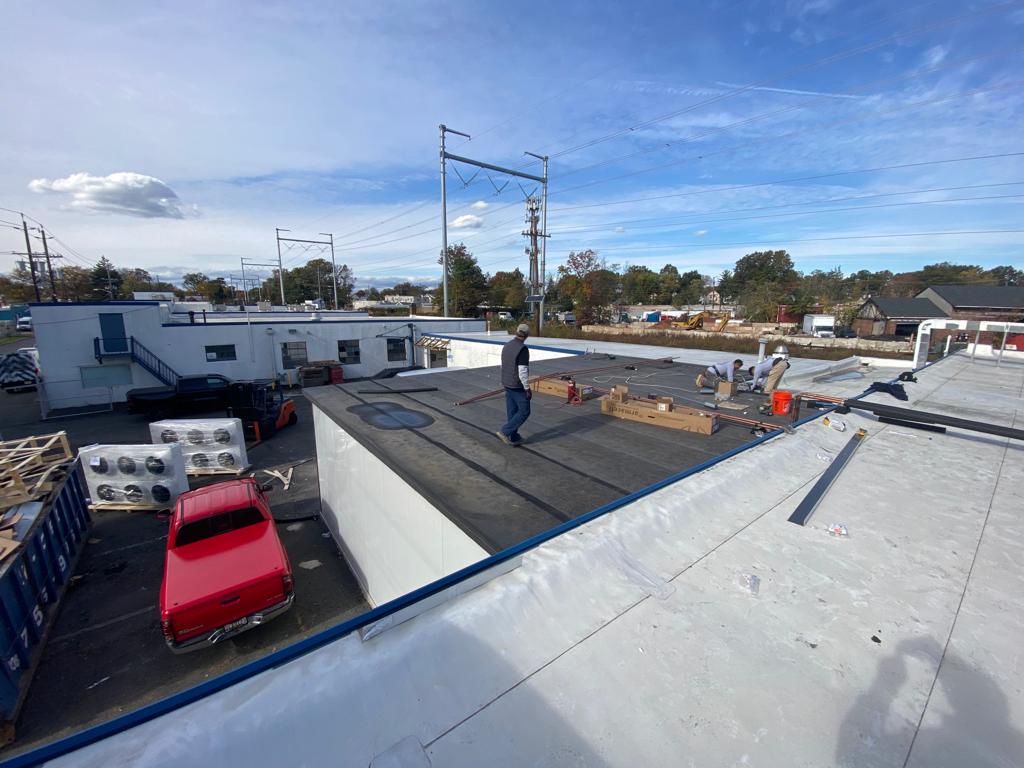
Food Processing and Cold Storage Roofing in Amarillo, TX
Amarillo is one of the most important beef processing centers in the United States, and that single fact defines the food facility roofing market in the Texas Panhandle more than any other. The city sits at the heart of the Texas Beef Belt, a concentration of cattle feeding operations, processing plants, and cold chain logistics infrastructure that handles a significant fraction of the nation's beef supply. Tyson Foods, JBS USA, and Cargill Meat Solutions all operate major processing facilities in or near Amarillo, and the cold storage and distribution infrastructure supporting those operations extends throughout the Panhandle region. This is a heavy-industrial food processing environment, not a light manufacturing one, and roofing work here reflects that intensity.
HACCP requirements in Amarillo's beef processing facilities are enforced under continuous USDA FSIS inspection — meaning a federal inspector is on-site during all production hours. This creates a food safety oversight intensity that is higher than most other food manufacturing segments. Any roofing work above a processing area, cooler, or chill line requires advance coordination with the plant's food safety manager and, in some cases, with the on-site USDA inspector. Written contamination control plans, documented pre-task inspections, and post-work sanitation verification are standard requirements, not optional extras. Contractors who have not worked in USDA-inspected facilities before will underestimate the complexity of the approval process for overhead maintenance activities.
Vapor management challenges in Amarillo's cold storage facilities are shaped by the region's unique climate combination: very low humidity in winter (annual average relative humidity in the 40 to 50 percent range) but high heat in summer with moderate afternoon humidity during monsoon season. This seasonal reversal of vapor pressure direction means that a cold storage vapor retarder designed for one season may actually drive moisture the wrong direction during the other. The safest approach for Amarillo cold storage — particularly for fresh beef coolers maintained at 32°F to 36°F — is a fully closed vapor barrier system with no intentional permeability, which prevents moisture migration regardless of the season's driving direction.
Wash-down requirements in beef processing facilities are among the most demanding in the food industry. Hot water wash-down at 160°F to 180°F, combined with alkaline and acid CIP chemicals, runs multiple times per day on production floors. The humidity and condensation from wash-down operations migrates upward into the wall and roof assembly through every unsealed penetration and joint. Base flashings in Amarillo meat processing facilities must be carried to a minimum height of 18 inches above the deck, with a continuous sealant bead at the termination bar, specifically because wash-down splash combined with cleaning chemical residue is a far more aggressive roofing environment than precipitation-only exposure on a standard commercial building.
Hail is a roofing risk that Amarillo food facilities share with data centers, but the consequences are different. A hail puncture on a beef cooler or freezer roof can allow moisture infiltration that goes undetected for months while quietly degrading the insulation assembly. In a facility where the refrigeration system runs 24/7, the energy cost of degraded insulation adds up rapidly. A freezer roof that loses 20 percent of its R-value to moisture infiltration after a hail event will cost meaningfully more to operate per year than a properly maintained system, and the refrigeration equipment runs harder — shortening its service life. Post-hail infrared inspections should be as routine for food facilities as they are for data centers in the Panhandle.
The cold storage and distribution infrastructure supporting Amarillo's beef industry includes large refrigerated distribution centers along the I-40 corridor, blast freezer facilities at processing plants, and a network of temperature-controlled transload facilities near the rail yards in the downtown industrial corridor. These facilities collectively represent hundreds of thousands of square feet of cold storage roofing. The maintenance cycle for these roofs is driven partly by the producers' food safety program requirements and partly by the very practical reality that a cooler or freezer that goes offline during Amarillo's summer heat loses product within hours — a loss that dwarfs any roofing repair cost.
Wind uplift requirements for Amarillo food facility roofs are as demanding as for data centers in the region. The Panhandle's design wind speed requires enhanced attachment in perimeter and corner zones, and the large footprint of a typical beef processing plant or cold storage facility means a substantial perimeter zone length where wind uplift forces are highest. Tapered insulation systems used to provide positive drainage on large food facility roofs need to be secured with adhesive or mechanical attachment systems rated for the local wind design pressure, not just standard commercial attachment specifications designed for lower-wind markets.
Insulation specification for Amarillo cold storage roofs typically uses extruded polystyrene (XPS) as the primary insulation layer rather than polyisocyanurate, because XPS maintains its R-value under cold temperature conditions and has lower moisture absorption. This matters especially in Amarillo's beef processing segment, where cooler and freezer temperatures range from 32°F for chilled beef to -10°F for frozen products. Polyiso's R-value degradation at low temperatures — which can reduce labeled R-value by 20 to 30 percent at cold conditions — makes it a less reliable choice for the coldest storage applications, even though it performs well in the thermal zone above the vapor retarder.
Scheduling food facility roof work in Amarillo is constrained by the beef processing industry's production calendar. Beef processing plants typically schedule major maintenance and capital projects during the two annual USDA-approved downtime windows — usually one in late spring and one in late fall — which are the same windows targeted by refrigeration, electrical, and structural contractors. Roofing contractors who want to be competitive in the Amarillo food facility market need to be able to mobilize a full crew within days of a maintenance window opening and work efficiently under the time constraints of a facility that cannot extend its downtime indefinitely without financial consequences.
Questions Owners Ask
What do USDA FSIS inspectors actually look for regarding roofing maintenance?
USDA FSIS inspectors review facility maintenance records under their HACCP prerequisite programs, including pest control, sanitation, and facility maintenance documentation. For roofing, they want to see evidence that overhead areas are maintained in good repair (no active leaks, no visible moisture damage, no peeling or spalling that could fall into product areas), that any roofing work above production zones was conducted under a contamination control plan, and that roofing materials used in proximity to product are non-contaminating. A facility that can't produce these records on request is at risk of a Notice of Intended Enforcement.
How do we prevent chemical contamination from roofing materials in a beef processing environment?
All roofing materials used above or adjacent to USDA-inspected production areas should have food-facility-compatible material documentation — specifically, confirmation that the membrane, adhesive, and sealant products do not off-gas or leach compounds on the FDA or USDA restricted substances lists. Most major TPO and EPDM membrane manufacturers can provide this documentation on request. During installation, open-container chemical products (primers, adhesives) should never be staged on roof sections directly above active production lines, even when a barrier is in place.
Why is our freezer using more energy than it did when first installed?
In Amarillo's climate, the most common cause of progressive refrigeration energy increase on an older freezer building is insulation R-value degradation from moisture infiltration — either through a compromised vapor retarder or hail punctures in the membrane. An infrared scan of the roof will identify wet insulation zones as thermal anomalies. Addressing targeted wet sections through localized replacement, rather than waiting for a full system failure, is typically the most cost-effective response when the moisture is caught early enough.
How do we handle a roof repair during an active USDA-inspected production shift?
Emergency repairs during active USDA inspection hours are possible but require a specific protocol: immediate notification to the food safety manager and on-site USDA inspector, activation of the facility's emergency maintenance contamination control procedure (physical barrier, debris containment, no chemical application above open product areas), and documentation of the repair and contamination controls in the facility's maintenance log. Some facilities keep an emergency roof repair kit in the maintenance shop for exactly this scenario — temporary leak-stop materials that can be applied without opening chemical containers or generating debris.
What's the cost difference between a standard commercial re-roof and a food-facility-compliant re-roof?
For a typical Amarillo cold storage or processing facility re-roof, food-facility compliance requirements add roughly 15 to 25 percent to project cost compared to a standard commercial re-roof of the same square footage. The premium covers contamination control setup, phased work scheduling to maintain production, extended shift hours to work within maintenance windows, documentation preparation, and material selection that meets food-safety compatibility requirements. In most cases, this cost is recoverable through FSMA compliance avoidance and the energy savings from a properly specified cold storage insulation system.
Start a conversation
Send the building location, roof type if known, leak photos, tenant restrictions, and the timing pressure. We will help turn the roof concern into a clear next step.
Contact Commercial Roofing of AmarilloExplore More
- Logistics 3pl
- Education Facilities
- Food Processing Agriculture
- Reit Roofing
- Property Management Firms
- Occupied Building Reroofing
- Roof Inspection Condition Report
- Service Maintenance Info
- Commercial Roof Repair
- Commercial Roof Replacement
- Commercial Roof Coatings
- Roof Maintenance Programs
- Commercial Roof Inspections & Reports