
School and K-12 Educational Building Roofing
School and K-12 Educational Building Roofing gets scoped from roof evidence, operating risk, Amarillo weather exposure, and the decision the building owner needs to make.
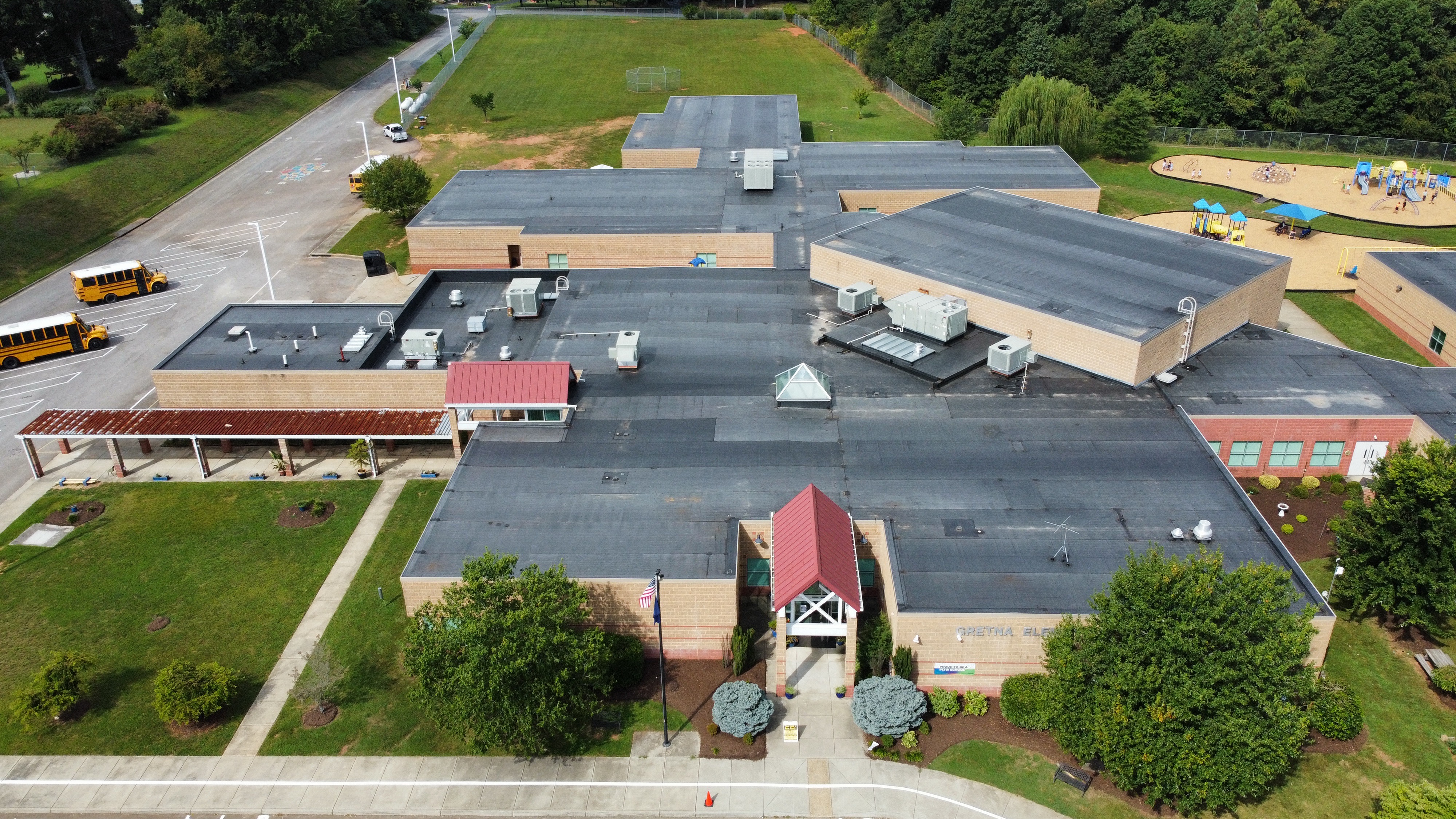
School and K-12 Educational Building Roofing in Amarillo, TX
Amarillo Independent School District serves more than 31,000 students in Potter and Randall Counties, operating a building inventory that ranges from early twentieth-century neighborhood schools to contemporary consolidated high school campuses. AISD's roofing challenges are defined by the Texas Panhandle's extreme climate: the highest hail-frequency in the United States, wind speeds that require engineering rather than rule-of-thumb fastener patterns, UV intensity at 3,600 feet of elevation, and wide diurnal temperature swings that test membrane flexibility on timelines faster than national average manufacturer estimates predict.
Texas school district summer breaks typically run from late May through mid-August, providing approximately eleven to twelve weeks of student-free access to school buildings. For AISD, this window is the only practical time for major roofing work—the combination of Panhandle wind, hail, and thermal cycling makes fall and spring contractor work on occupied buildings difficult to schedule safely. The district's facilities staff has learned that procuring materials in March and April—before the peak of spring hail season, which can delay material shipments and inflate pricing through increased regional demand—produces the most predictable project execution outcomes.
Large flat and low-slope institutional roofs dominate AISD's building inventory. The structural steel systems common to Panhandle school construction from the 1960s through 1990s were designed for the wind and snow loads of that era's building codes, but today's updated wind maps and improved understanding of actual hail impact loads place higher demands on the roofing systems attached to these structures. When AISD specifies a new roofing system for an older building, the attachment design must reference current IBC wind speed requirements for Potter and Randall counties—requirements that are meaningfully higher than the standards the building was originally designed under.
Hail impact resistance is the most important single specification parameter for AISD roofing systems. The Panhandle's hail frequency is among the highest in the country, and a roofing system that cannot withstand 1.5-to-2-inch hailstones will require emergency repairs or replacement within five to ten years on a statistical basis in this market. AISD has moved toward specifying Class 4 impact-resistant roofing systems—the highest FM 4473 and UL 2218 rating available—for all major school roofing replacements. Several Texas school districts have documented insurance premium reductions of 20 to 35 percent after transitioning their entire building inventory to Class 4 systems, savings that compound annually and significantly offset the higher initial material cost over the warranty period.
Texas prevailing wage requirements apply to AISD public school construction projects, and the district's contracts must comply with Texas Government Code Chapter 2258, which establishes prevailing wage rates for school construction in Potter and Randall counties. AISD's procurement office must include prevailing wage schedules in bid documents and requires contractors to submit certified payrolls for verification. Texas Education Agency oversight of AISD facilities spending adds an additional layer of accountability that makes prevailing wage compliance documentation essential—facilities programs that lack this documentation face complications during TEA facilities compliance reviews.
Multi-building AISD roofing programs are typically funded through the district's bond programs, which Texas school districts put to voters in periodic elections. The 2016 and 2022 AISD bond programs both included significant facilities improvement components that funded roofing replacements across multiple elementary and secondary buildings. Bond-funded projects in Texas school districts are subject to TEC compliance requirements and in most cases require the oversight of a registered architect or engineer for design and construction administration. Building committees and facilities staff who attempt to execute bond-funded roofing projects without proper professional design oversight expose the district to compliance risk and potential bond program deficiencies.
Occupied school safety in Amarillo requires particular attention to the Panhandle's weather unpredictability. Summer thunderstorms, which can arrive quickly from the west with little advance warning, require that AISD construction contracts include explicit provisions for contractor weather monitoring and rapid site securing protocols. A school roof with an open tear-off area during a summer storm event is a genuine emergency—water infiltration into an open deck can damage interior finishes, electronics, and teaching materials that are far more expensive to replace than the cost of proper weather monitoring and emergency tarping. The contractor's weather response protocol should be reviewed and approved by the district's facilities director before any work begins.
Annual budget cycle timing for AISD roofing capital spending requires alignment between the district's bond program timeline and the annual operating budget cycle. Bond-funded projects must be completed within the bond resolution's authorized scope, and any changes to scope or cost require board approval in addition to the standard procurement processes. Operating budget-funded maintenance repairs—annual drain cleaning, targeted flashing repairs, minor membrane patching—should be scheduled in the spring and fall budget periods so that approved funds are available before the summer construction season begins. AISD facilities staff who wait until June to request operating budget approval for summer maintenance work routinely find themselves unable to execute planned maintenance until after school resumes in August.
Long-term warranty management for AISD's roofing portfolio requires a systematic database approach that the district has invested in over the past decade. Each building's warranty documentation—including manufacturer warranty terms, workmanship warranty expiration dates, and the specific system components covered—is maintained in the district's facilities management system and updated after each completed project. This database allows AISD facilities staff to identify buildings whose warranties are approaching expiration and to schedule warranty inspection walkthroughs before coverage lapses, maximizing the value recovered from manufacturer warranties on a portfolio that spans dozens of buildings and multiple system types.
- Why is Class 4 impact resistance important for AISD school roofs?
- Potter and Randall counties have among the highest hail frequencies in the United States. Class 4 impact resistance—the highest rating under FM 4473 and UL 2218—provides the best available protection against 1.5-to-2-inch hailstones that occur regularly in this market. Texas school districts that have transitioned to Class 4 systems have documented insurance premium reductions of 20 to 35 percent that offset the higher material cost over the warranty period.
- How does Texas prevailing wage law apply to AISD roofing projects?
- Texas Government Code Chapter 2258 establishes prevailing wage requirements for school construction in Potter and Randall counties. AISD bid documents must include prevailing wage rate schedules, and contractors must submit certified payrolls for verification. TEA oversight of bond-funded facilities spending makes compliance documentation essential for AISD's facilities programs.
- What weather monitoring requirements should AISD include in roofing contracts?
- Contracts should require daily weather monitoring by the contractor and a written protocol for securing open roof areas when severe weather is forecast. The Panhandle's rapid storm development makes same-day forecasting inadequate—require five-day outlooks and a trigger protocol that limits open deck area when tornado watches or severe thunderstorm watches are in effect for Potter or Randall County.
- When should AISD begin planning for a summer roofing program?
- Begin design and procurement in the fall of the prior school year. Procure materials in March and April before spring hail season peaks and creates supply pressure. Complete permitting before school lets out in late May so construction can begin on the first available day of summer break, maximizing the eleven-to-twelve-week student-free window.
- How does the AISD bond program fund roofing projects?
- Voter-approved AISD bond programs authorize specific capital improvement scopes, including roofing replacements, with fixed spending limits. Bond-funded roofing projects require Texas Education Agency compliance and professional design oversight by a registered architect or engineer. Changes to bond-funded project scope or cost require Board of Trustees approval in addition to standard procurement processes.
Start a conversation
Send the building location, roof type if known, leak photos, tenant restrictions, and the timing pressure. We will help turn the roof concern into a clear next step.
Contact Commercial Roofing of AmarilloExplore More
- TPO Single Ply Roofing
- Roof Tear Off Replacement
- Skylight Penetration Flashing
- Service Maintenance Info
- Restaurant Roofing
- PVC Roofing
- Insurance Claim Roof Documentation
- Self Storage Roofing
- Commercial Roof Repair
- Commercial Roof Coatings
- Roof Maintenance Programs
- Commercial Roof Inspections & Reports
- Roof Reports & Assessments