
Mixed-Use Development Roofing
Mixed-Use Development Roofing gets scoped from roof evidence, operating risk, Amarillo weather exposure, and the decision the building owner needs to make.
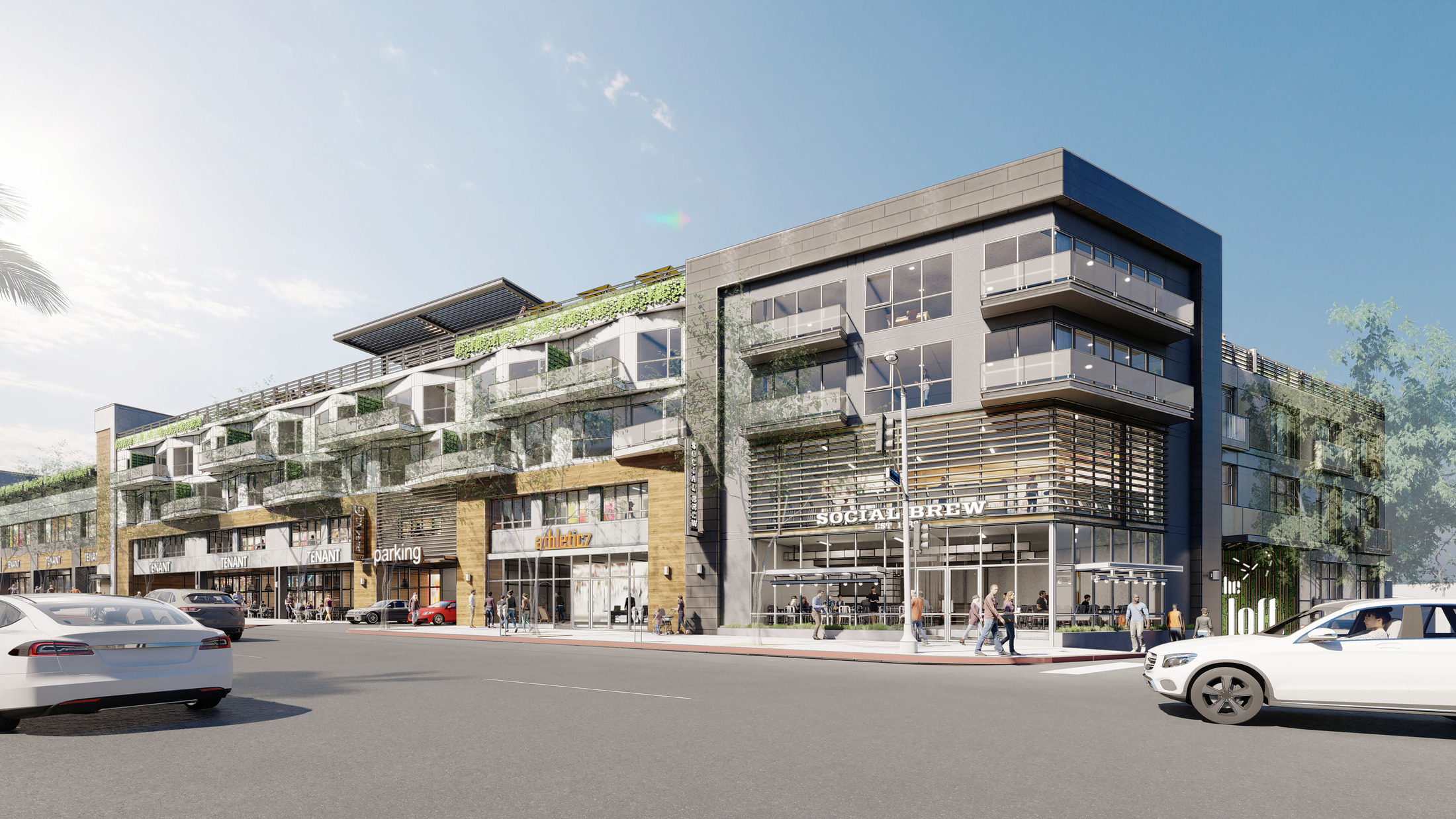
Mixed-Use Development Roofing in Amarillo, TX
Amarillo's downtown revitalization effort has brought a new scale of development to the Texas Panhandle's largest city, with projects along Polk Street and the Amarillo National Center district combining ground-floor retail and hospitality uses with upper-floor office space and, increasingly, residential units as the city works to attract a younger professional demographic. Mixed-use construction in Amarillo presents roofing challenges shaped directly by the region's climate extremes — the Panhandle is one of the windiest metro areas in the United States, receives hailstorms that consistently rank among the most severe in Texas, and experiences temperature swings between summer highs above 100°F and winter lows that regularly drop below zero. A roof assembly on a mixed-use building in this market must be specified to survive conditions that would strain systems designed for more temperate regions.
Wind uplift is the primary structural concern for roofing on Amarillo mixed-use buildings. The flat Panhandle landscape provides no topographic shielding, and sustained winds above 40 mph are a routine occurrence rather than a storm event. Mixed-use buildings with stepped rooflines — where a taller residential component meets a lower retail pavilion — create corner and edge zones where uplift pressures concentrate. ASCE 7 wind load calculations for Amarillo must account for the open terrain exposure category, which increases design uplift pressures significantly compared to an equivalent building in a sheltered urban canyon. Fastening patterns, adhesive bonding schedules, and metal edge securement must all be specified to match these calculated loads, not carried over from a project in a lower-wind market.
Hail impact resistance is a non-negotiable specification requirement for any roofing membrane installed on an Amarillo mixed-use building. The city sits squarely in the Central Plains hail corridor, and insurance carriers serving the Texas Panhandle market have become increasingly specific about impact resistance ratings as a condition of coverage. Class 4 impact-rated membranes and cover boards are the standard that Amarillo commercial property owners should require, and the warranty documentation must reflect impact resistance as a covered performance attribute. After a hail event, a mixed-use building manager should commission a professional roof inspection before filing an insurance claim — damage documentation prepared by a qualified contractor is more defensible than adjuster estimates prepared without full roof access.
The retail-to-residential transition in an Amarillo mixed-use building requires waterproofing continuity across a plane that also serves as a structural fire separation. Texas building code requirements at these transitions mandate that the roofing contractor's scope of work be coordinated with the fire-stopping contractor and the structural engineer of record, since the roofing membrane, the insulation layer, and the structural deck assembly must collectively meet the rated assembly classification. In Amarillo's newer downtown projects, where developers have worked with the City's planning department to meet form-based code requirements for the downtown overlay district, the assembly details are typically specified in the architectural drawings and must be followed precisely to maintain the design professional's stamp of approval.
Rooftop amenity spaces on Amarillo mixed-use buildings face exposure conditions that require more robust protection than the same amenity deck in a more sheltered urban environment. A rooftop deck above a downtown Amarillo apartment building must be designed with windscreen infrastructure, secure anchorage for any furniture or planters, and a waterproofing assembly that can accommodate the thermal cycling of a surface exposed to both extreme solar gain in summer and rapid temperature drops in winter. The insulation layer beneath an amenity deck in Amarillo also carries a secondary function: thermal mass that slows temperature cycling in the waterproofing membrane, extending its service life in a climate where daily temperature swings of forty degrees are not unusual.
Adaptive reuse projects along Amarillo's historic Sixth Street corridor — converting 1930s and 1940s commercial buildings into mixed retail and residential — present roof assemblies that bear little resemblance to what the original construction drawings show. Decades of layered reroof cycles, modified parapet configurations, and improvised flashing repairs create a condition that must be fully documented before a new system is specified. Contractors who simply overlay a new membrane on an existing assembly of unknown composition are transferring unknown risk to the building owner. Core samples at multiple locations, combined with a review of historical building permits available from the Amarillo Building Safety department, provide the baseline needed to bid these projects with confidence.
Coordinating a reroofing project on an occupied Amarillo mixed-use building requires working around the operating hours of retail and restaurant tenants on the ground floor while respecting the residential occupants above. During Amarillo's summer months, rooftop temperatures on dark-surface membranes can exceed 170°F, creating conditions that require mandatory heat illness prevention protocols for roofing crews working under OSHA standards. This heat also limits the productive work window to early morning hours before temperatures peak, which compresses the available daily schedule and extends project duration. Building managers should account for this seasonal productivity factor when reviewing contractor timelines and should not assume that a schedule developed for a spring installation translates directly to a midsummer job.
Long-term maintenance agreements for Amarillo mixed-use buildings should specifically address the post-hail inspection protocol. Unlike most other maintenance triggers, hail damage can render a roof assembly compromised without any visible interior leak — the membrane may be perforated or its protective surface abraded in ways that will allow water infiltration only after subsequent rain events. A maintenance agreement that triggers a professional inspection within thirty days of any hail event affecting the area code of the building's location provides the systematic coverage that self-managed inspection programs typically miss. Pairing this with a documented photographic baseline taken at project completion gives both the building owner and the maintenance contractor a reliable reference point for assessing damage claims.
Selecting a roofing contractor for an Amarillo mixed-use building should begin with verifying their familiarity with Texas Panhandle wind zone requirements and their experience specifying Class 4 impact-resistant systems. Ask how they handle temporary waterproofing staging during a project that spans a hail season, and request their protocol for notifying building management when a significant weather event is forecast. The best contractors in this market have internalized the Panhandle's weather volatility as a core project management constraint, not an afterthought, and their scheduling and contingency planning will reflect that experience from the first pre-construction meeting.
- What wind uplift standards apply to roofing on Amarillo commercial buildings?
- Amarillo falls within a high-wind exposure zone under ASCE 7, and the open terrain of the Texas Panhandle places most commercial buildings in Exposure Category C or D for wind load calculations. Mixed-use buildings with parapets and rooftop equipment are particularly vulnerable at corner and edge zones where uplift pressures concentrate. Fastener patterns, adhesive specifications, and metal edge details must be engineered to the calculated uplift loads for the specific building geometry, not applied from a generic specification.
- Is Class 4 impact resistance required for Amarillo commercial roofing?
- While Texas does not mandate Class 4 impact resistance statewide, Amarillo's location in one of the most active hail corridors in North America has led most commercial property insurance carriers in the region to require or strongly incentivize it through premium discounts. For mixed-use buildings with multiple tenants depending on a single roof system, the additional cost of Class 4 membranes and cover boards is justified by both reduced insurance premiums and the reduced likelihood of needing emergency repairs after a hail event.
- How should a mixed-use building owner prepare for reroofing during summer months in Amarillo?
- Summer reroofing in Amarillo requires the contractor to implement a formal heat illness prevention plan under OSHA guidelines, restrict productive rooftop work to early morning hours before temperatures peak, and provide shaded rest areas and hydration stations for crews. Building managers should expect reduced daily productivity compared to spring or fall work windows, extend the projected project duration accordingly, and provide advance notice to retail tenants that work may begin at sunrise to take advantage of cooler morning temperatures.
- What are the most common failure points on Amarillo adaptive reuse roofs?
- The most common failure points on Amarillo adaptive reuse projects are through-wall flashings at parapet walls that have experienced thermal movement beyond their design range, internal drainage scuppers blocked by debris accumulation in the flat Panhandle landscape, and penetration seals around legacy HVAC equipment that was installed without proper counterflashing. These failure points are typically identified during a pre-bid infrared survey and core sampling program, which is the essential first step before specifying a replacement system on any building with an unknown reroofing history.
- How does the retail-to-residential occupancy transition affect the roofing warranty?
- Standard single-ply membrane warranties typically cover only the field roofing assembly and may specifically exclude transition assemblies at occupancy boundaries if those assemblies involve fire-rated components or assemblies not manufactured by the warranty provider. Mixed-use building owners should request warranty language that explicitly covers the full transition zone assembly, including flashings, insulation, and any rated component, and should verify that the manufacturer's technical representative has reviewed and approved the assembly details before work begins.
Start a conversation
Send the building location, roof type if known, leak photos, tenant restrictions, and the timing pressure. We will help turn the roof concern into a clear next step.
Contact Commercial Roofing of Amarillo