
Government and Municipal Building Roofing
Government and Municipal Building Roofing gets scoped from roof evidence, operating risk, Amarillo weather exposure, and the decision the building owner needs to make.
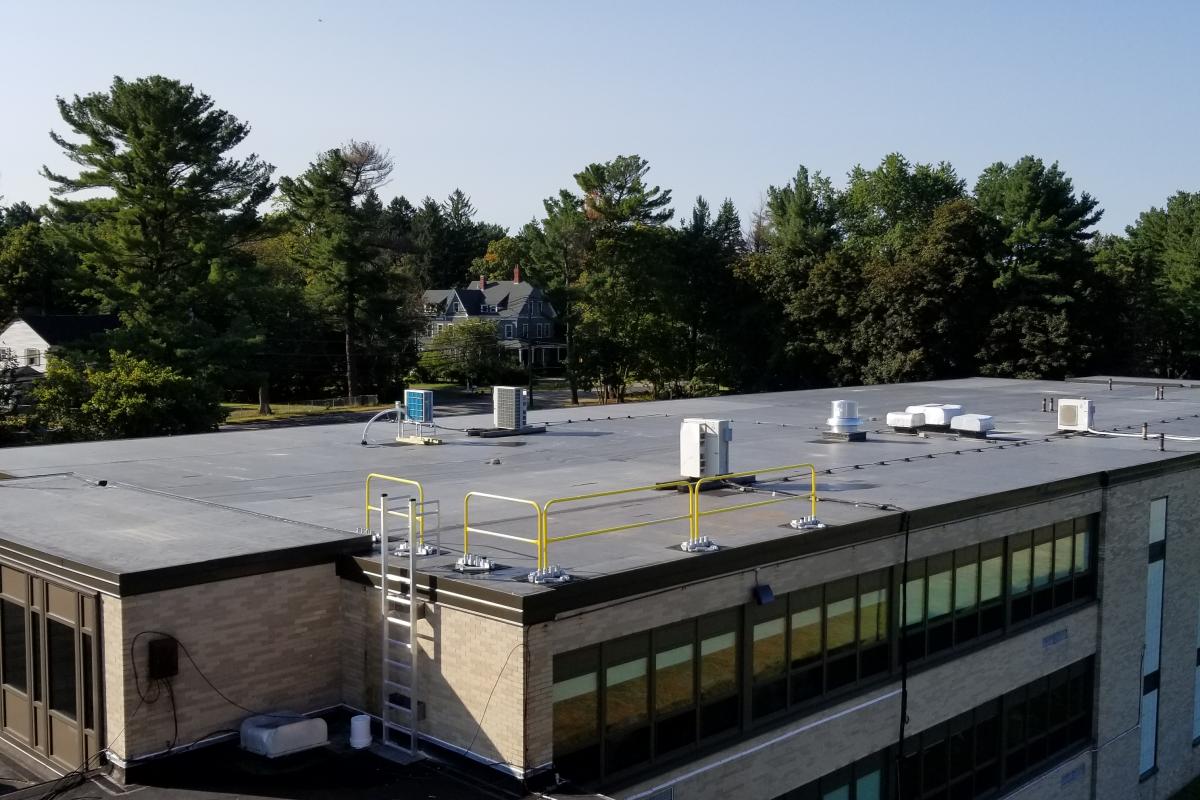
Government and Municipal Building Roofing in Amarillo, TX
Amarillo's municipal building portfolio sweeps from the historic Potter County Courthouse in the heart of downtown to the Amarillo Civic Center Complex, the Jack B. Kelley Public Safety Complex housing fire and police operations, branch library facilities scattered across Canyon Road and Wolflin Avenue corridors, and the Amarillo Transit maintenance facility on Northeast 14th Avenue — a collection of structures whose roofing needs fall under the City of Amarillo's procurement rules and Texas law governing public construction contracts. Texas Government Code Chapter 2269 establishes the competitive bidding, construction manager at risk, and design-build delivery methods available to municipalities, and selecting the appropriate method before solicitation is published determines how roofing contractors structure their offers and what qualifications documentation is required before bids are opened at Amarillo City Hall.
Texas does not have a statewide prevailing wage law equivalent to Pennsylvania or Ohio, but projects receiving any federal funding — including HUD Community Development Block Grant dollars that flow through the City of Amarillo's Community Development Division — trigger full Davis-Bacon Act compliance. The Department of Labor publishes wage determinations for Potter and Randall Counties that establish minimum hourly rates for roofer classifications working on federally assisted contracts, and the City's CDBG program administrator conducts payroll spot-checks during construction. For non-federally-funded Amarillo municipal projects, competitive market wages apply, but contractors bidding against prevailing wage contractors from larger Texas metro areas occasionally underbid Amarillo government projects, creating quality concerns that the City's Purchasing Division has addressed by adding experience and financial strength scoring to its evaluation criteria.
The Panhandle's climate inflicts some of the most demanding roofing conditions in North America on Amarillo government buildings. The city sits at 3,600 feet elevation on the Llano Estacado, and hailstorms capable of producing three-inch stones hit the metro area at a frequency that ranks Amarillo among the top five most hail-prone large cities in the United States. The Amarillo Emergency Management Office's after-action reports from the 2018 and 2023 hailstorms document significant roof damage to City-owned facilities, and the City's Risk Management Division now requires impact-resistance ratings for any membrane specified on publicly funded roofing projects. We specify Class 4 impact-resistant modified bitumen cap sheets and FM 4473-rated TPO membranes on Amarillo government projects and provide the UL 2218 or FM certification documentation that the City's insurance broker requires to maintain preferred premium rates on the City's property schedule.
High-wind exposure is equally consequential for Amarillo roofing design. The Texas Panhandle averages wind speeds that regularly exceed 50 mph, and documented gusts during Blue Norther events have topped 80 mph at Amarillo Rick Husband International Airport's ASOS station. City Hall's rooftop mechanical equipment and the Civic Center's large low-slope sections require wind uplift resistance engineered to the ASCE 7 exposure category for open terrain, which for most Amarillo government buildings means Design Wind Speed Zone I ratings and mechanically fastened or fully adhered membrane systems rather than ballasted assemblies. Our engineers specify fastener pull-out tests on existing deck substrates before finalizing attachment patterns, preventing the post-storm membrane billowing that has triggered emergency repair calls on City facilities historically addressed by out-of-town contractors unfamiliar with Panhandle wind dynamics.
Potter County Courthouse, an Italianate Revival structure completed in 1932 and a contributing resource to the Amarillo Downtown Historic District, requires engagement with the Texas Historical Commission whenever publicly funded capital work alters character-defining features. The THC's Preservation Division administers National Register properties and coordinates Section 106 consultations for projects receiving federal assistance. The Courthouse's clay tile roof over the original section has been partially replaced with incompatible materials over prior maintenance cycles, creating a hybrid assembly that the THC's architectural historian must review before any comprehensive re-roofing is specified. We have completed pre-application meetings with THC staff on Panhandle courthouses and carry the existing conditions survey methodology that the Commission's review process requires before issuing a finding of no adverse effect.
Amarillo Fire Department operates 14 stations positioned to meet ISO Grade 2 response standards across the 100-square-mile metro area, and station roofing projects require scheduling coordination with the Operations Division to ensure that coverage is maintained during construction. Station apparatus bays constructed during the 1970s and 1980s predominantly use steel deck with aging polyurethane foam roofing systems that have lost R-value through moisture infiltration and UV degradation. We core-sample existing foam assemblies to measure in-place moisture and thermal performance before specifying re-cover versus tear-off, avoiding over-design that inflates costs and under-design that perpetuates the energy loss the City's Facilities Management division has documented in its energy audit of station buildings.
The City of Amarillo's sustainable building policy, aligned with the Texas Facilities Commission's guidelines for state buildings, requires that major re-roofing projects on City-owned facilities consider cool roof membranes where life-cycle cost analysis supports the premium. Amarillo's 3,600 annual cooling degree days create meaningful operating cost savings from reflective membranes, and AEP Texas offers commercial energy efficiency incentive payments that can offset 15 to 25 percent of the incremental cost of upgrading from standard dark membrane to ENERGY STAR-certified TPO or PVC. We prepare the life-cycle cost analysis documentation using DOE-approved methodologies that the City's Budget Office requires when requesting Capital Improvement Program funding for upgrades exceeding the minimum code-compliant specification.
Amarillo Police Department's 1, headquarters and the six Area Commands require rooftop access control that mirrors the fire station security requirements but adds the complication of active evidence processing facilities and detention holding areas. The APD's Facilities Coordinator maintains an approved contractor access register, and all personnel working on police facility roofs must appear on the register at least five business days before scheduled work. Our employee vetting program includes state criminal history background checks through DPS TexasOnline, satisfying the APD's specific documentation requirement, and we maintain a dedicated crew roster for public safety facility projects that avoids rotating in workers who have not yet completed the clearance process.
Warranty terms for Amarillo public roofing contracts extend beyond standard commercial manufacturer NDL programs because the City's standard construction contract includes a liquidated damages clause of $500 per day for roofing failures that cause documented interior damage to City facilities within the warranty period. This clause creates contractor exposure beyond the roofing contract value itself and makes manufacturer-backed NDL warranty coverage not optional but financially essential for any contractor working on City of Amarillo projects. We are approved applicators for Sika Sarnafil, Versico, and Tremco NDL programs, maintain the installer certification documentation each manufacturer requires, and provide the City with direct manufacturer contact information so warranty claims can be processed without contractor intermediation if disputes arise.
- Does Texas require prevailing wages on Amarillo city roofing projects?
- Texas does not have a statewide prevailing wage law for non-federally-funded public construction, so most City of Amarillo projects use competitive market wages. However, projects receiving federal funding such as HUD Community Development Block Grants trigger Davis-Bacon Act compliance with DOL-published wage determinations for Potter and Randall Counties.
- How does Amarillo's hail exposure affect roofing specifications for government buildings?
- The Amarillo area experiences some of the highest hail frequency in North America, and the City's Risk Management Division requires impact-resistance ratings on all publicly funded roofing projects. Class 4 impact-resistant membranes rated under UL 2218 or FM 4473 are standard for City facilities, and the documentation is required by the City's property insurance carrier to maintain preferred premium rates.
- What wind design standards apply to City of Amarillo roofing projects?
- Amarillo's open terrain exposure and documented high-wind events require roofing systems designed to ASCE 7 exposure category standards for the Texas Panhandle, which typically means mechanically fastened or fully adhered systems rather than ballasted assemblies. Wind uplift resistance calculations should be based on Design Wind Speed Zone I ratings and verified with fastener pull-out testing on existing deck substrates.
- Are there historic preservation requirements for roofing work on the Potter County Courthouse?
- The Potter County Courthouse is a contributing resource to the Amarillo Downtown Historic District, and projects receiving federal funding that affect character-defining features require Section 106 consultation coordinated through the Texas Historical Commission. The THC review process requires existing conditions documentation and a treatment plan citing the Secretary of the Interior's Standards before THC issues a finding of no adverse effect.
- What delivery methods does Texas law allow for Amarillo municipal roofing projects?
- Texas Government Code Chapter 2269 authorizes municipalities to use competitive bidding, construction manager at risk, or design-build delivery methods for public construction projects. The selection of delivery method affects how roofing contractors structure their proposals and what qualifications documentation the City requires, so contractors should review the specific solicitation to confirm which method applies before submitting.
Start a conversation
Send the building location, roof type if known, leak photos, tenant restrictions, and the timing pressure. We will help turn the roof concern into a clear next step.
Contact Commercial Roofing of AmarilloExplore More
- Commercial Roof Leak Repair
- Roof Drains Scuppers
- Warehouse Roofing
- Retail Roofing
- EPDM Commercial Roofing
- Preventive Maintenance Programs
- Industrial Roofing
- Solar Roof Integration
- Commercial Roof Replacement
- Commercial Roof Coatings
- Roof Maintenance Programs
- Commercial Roof Inspections & Reports
- Roof Reports & Assessments